
Triage the pipeline, not the investment decision
An acquisition team needs to decide which locations deserve official-record checks or specialist time first. Scores help organize review, but coverage and individual findings can matter more than the ranking.
From input to follow-up
- Prepare stable external references and verify each location before submitting the list.
- Review row completion and coverage, then inspect the strongest module-level concerns in each completed report.
- Keep a separate triage sheet with the question, responsible reviewer and evidence needed before the investment decision.
What you take away
- Consistent location outputs tied to the team's own identifiers.
- A specialist-review shortlist with an explicit reason for escalation.
- A separate record of commercial assumptions and diligence conclusions; these are not supplied by a hazard score.
Plan and workflow requirements
Individual sites use manual capacity. Professional and Business API include CSV bulk workflows; an API-enabled plan is required for programmatic generation. Team seats and capacity vary by plan. Compare current plans and allowances.
Do not rank on the overall number alone
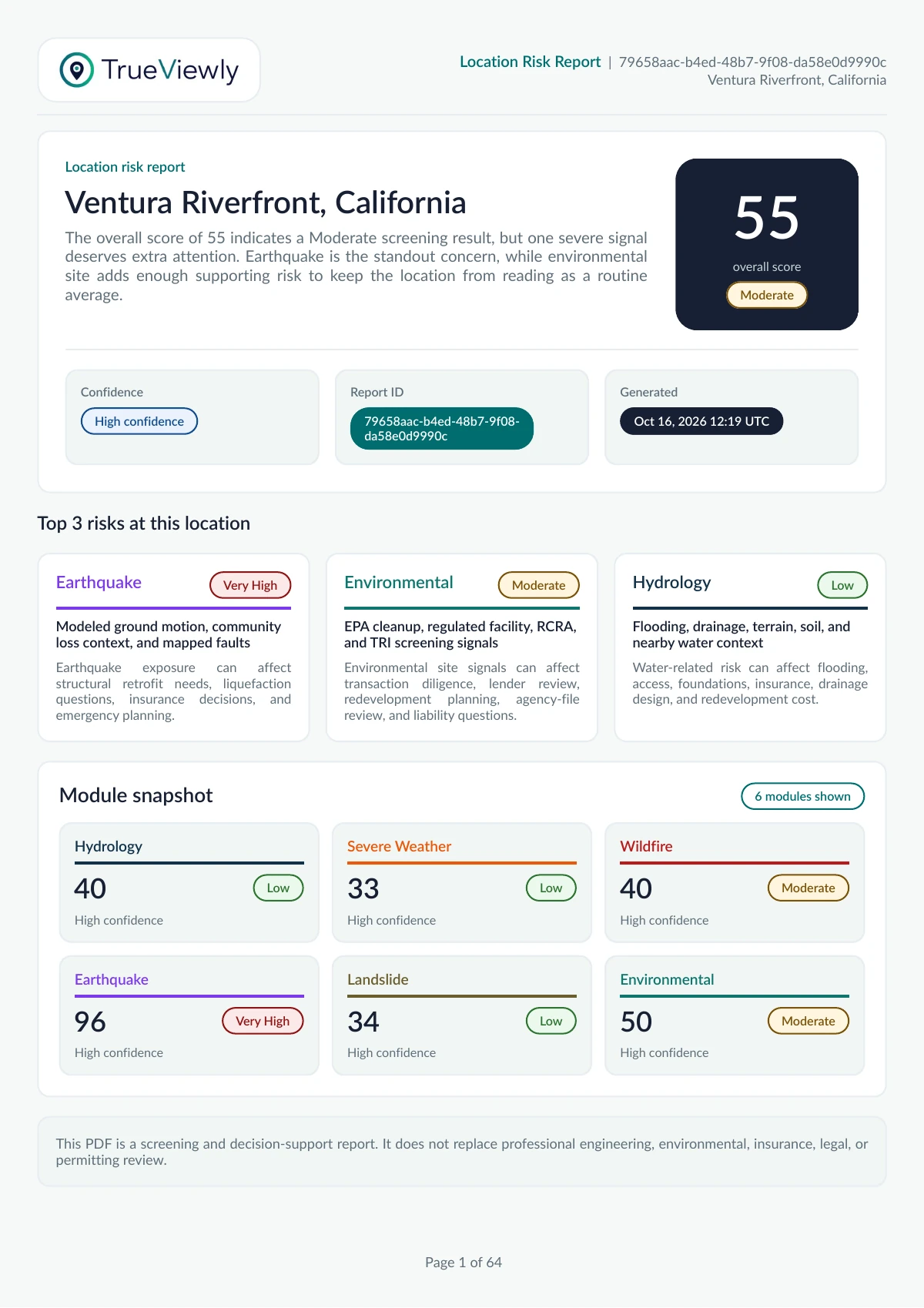
The Ventura sample's overall score is 55/100, yet earthquake is 96/100. That contrast is a reason to inspect the underlying module, not an investment recommendation or loss estimate.
The next question: Record why a site needs local geotechnical, structural or other specialist review rather than automatically excluding or approving it.
Ventura Riverfront, California · Generated Oct 16, 2026. This retained example illustrates the output, not a current site assessment or customer endorsement.
Read the portfolio review tutorial
TrueViewly provides informational decision-support outputs, not certifications, flood determinations, legal advice, engineering opinions, insurance determinations, or a replacement for official records and professional due diligence.