
Real-estate teams reviewing an individual location before a visit, client discussion or specialist referral.
Before the next property visit
A team has a shortlisted location but has not yet commissioned inspections. Start with the coordinate being reviewed, then decide which location questions belong on the visit agenda.
From input to follow-up
- Confirm the pin represents the intended location; a coordinate screen does not identify a legal parcel or building.
- Read the six modules, source availability and supporting evidence, not only the overall score.
- Keep a short list of source checks and questions for the next visit alongside the report.
What you take away
- A saved location report and PDF for the property file.
- A share link for the relevant reviewer, with limitations retained.
- A separate follow-up list rather than a safe/unsafe verdict.
Plan and workflow requirements
Manual checks are available on Free and paid plans. Included monthly capacity varies by plan; bulk uploads and API generation require their own eligible capacity. Compare current plans and allowances.
One overall score does not tell the whole story
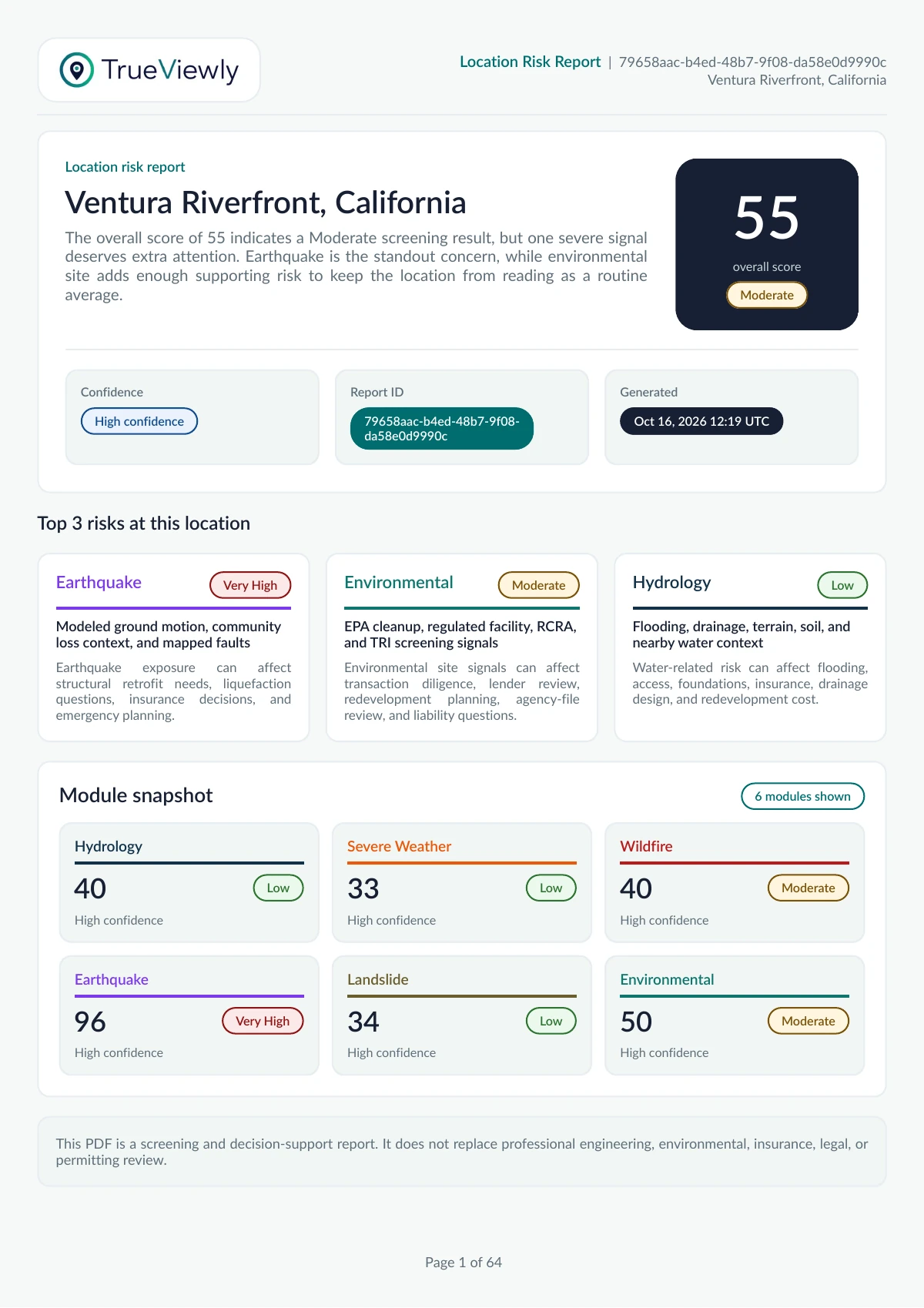
The Ventura Riverfront, California sample has an overall score of 55/100 (Moderate), while earthquake is 96/100 (Very High). These are screening indices, not probabilities of loss.
The next question: Review the earthquake evidence and local ground context before deciding what property-specific engineering questions to ask.
Ventura Riverfront, California · Generated Oct 16, 2026. This retained example illustrates the output, not a current site assessment or customer endorsement.
TrueViewly reports are informational decision-support outputs based on available datasets and user-provided inputs. They are not certifications, legal advice, engineering opinions, insurance determinations, government approvals, or a replacement for official records and professional due diligence.